
Industrial Hygiene
Impeccable industrial hygiene is essential in all sectors, whether in the food industry, manufacturing, healthcare, or pharmaceutical industry. Different legal regulations apply to each industry. In general, industrial hygiene includes all measures for personnel hygiene as well as for the basic cleanliness and maintenance of operational rooms, machines, and equipment.
What measures
are part of industrial hygiene?
To avoid impurities or contamination and thus ensure hygienic safety of the plant and the products, certain operational hygiene measures must be implemented.
What are the most important measures for operational hygiene in the food industry?
Particularly in the food industry, attention must be paid to a high standard of hygiene, regardless of whether the respective company is active in food production, food retail or wholesale, or in the gastronomic sector. This is to ensure a high level of consumer protection.
The following elementary measures should be observed for in-house hygiene, by Annex II of Regulation (EC) No. 852/2004:
- Compliance with the general cleanliness of all rooms, outdoor facilities, equipment, machinery, and equipment of the enterprise
- Regular cleaning and disinfection of all rooms and workplaces. (This includes treating floors, walls, ceilings, windows, doors and all surfaces with suitable disinfectants) and. Objects that come into direct contact with food must also be disinfected to an appropriate extent.
- Maintenance of all equipment and objects that have direct contact with foodstuffs
- Hygienic storage, handling, processing, and warehousing of food, avoiding adverse impact, e.g., from contamination, microorganisms, animal pests, waste, and inappropriate treatment and preparation methods
- Maintaining the cold chain, especially when handling perishable foods (eggs, fish, meat, poultry, and dairy products)
- Collecting all waste in sealable containers and disposing of it promptly, but no later than the end of operations
- Wearing suitable and clean work or protective clothing (appropriate changing rooms must be accessible to personnel)
- Thorough hand washing and hand disinfection by personnel after visiting the restroom facilities (appropriate hand washbasins with soap and hygienic hand drying facilities must be available in the restrooms; if necessary, additional dispenser with disinfectant must be installed)
- Smoking ban in all areas where food is produced or processed (private food and drinks may only be consumed in staff or social rooms)
- Companies are obliged to provide their employees with sufficient and regular training on health risks and food hygiene
What legal requirements govern occupational hygiene in the food industry?
The basic legal requirements for the production, processing, and placing on the market of foodstuffs are regulated in Regulation (EC) No. 852/2004 (food hygiene) and Regulation (EC) No. 853/2004 (hygiene rules for food of animal origin).
What are the most important operational hygiene measures in the pharmaceutical industry?
In the pharmaceutical sector, a hygienic environment is also mandatory and aims to protect pharmaceuticals and medicines from contamination as well as other adverse effects.
The pharmaceutical regulations include the EU GMP Guidelines. GMP stands for "Good Manufacturing Practice". This refers to specific guidelines to ensure the quality standards of the production processes and environment in the manufacturing process.
Detailed compliance with the requirements is checked in demanding approval processes and closely monitored by recurring inspections by the relevant authorities.
What legal requirements govern occupational hygiene in the food industry?
However, essential framework conditions must also be observed in cosmetics. The basis for this is the internationally applicable standard ISO 22716:2007 " Cosmetics — Good Manufacturing Practices (GMP) — Guidelines on Good Manufacturing Practices", known as cosmetics GMP for short. The guideline contains the hygienic and qualitative requirements for the manufacturing process, quality monitoring, storage, and shipping of cosmetic products.
The general legal basis in the EU is the Regulation (EC) No. 1223/2009, which regulates the general requirements and obligations for cosmetic products. In the various countries, other national laws could also take effect.
What does HACCP
have to do with
industrial hygiene?
Regulation (EC) No. 852/2004 also specifies how hygiene regulations are to be implemented: based on the seven principles HACCP concept. The acronym HACCP stands for Hazard Analysis and Critical Control Points.
The HACCP system is the basis for every food safety standard. It is based on self-monitoring and is used to analyze, evaluate, and eliminate microbiological, chemical, or physical hazards that arise in the handling of food and may pose a health risk to consumers.
If the implementation of the HACCP concept is not properly documented, this will be considered a hygiene deficiency.
Sampling for HACCP by Tentamus
Continuous sampling for the HACCP concept is a prerequisite for the chemical and microbiological analysis of food, drinking water and tobacco products. To carry out laboratory orders, our qualified hygiene and quality assurance staff take a wide range of different samples at your premises or collect the samples provided from you.
Upon request, sample collection also includes the provision of packaging and shipping materials.
The focus here is on the following types of sampling:
- Food samples for microbiological testing as part of the self-monitoring system and to meet the requirements of Regulation (EC) No. 2073/2005*
- Fruit and vegetable samples for residue analysis
- Drinking water samples for testing in accordance with the Drinking Water Regulation
- Samples for determining surface germ counts to verify cleaning and disinfection measures
- Samples for determining airborne bacteria counts
*This service does not fall within the scope of accreditation
How to establish an
effective hygiene management in your company?
Establishing effective hygiene management should be an important focus in your company. It is advisable to appoint at least one well-trained person as a hygiene officer and to assign this person the responsibility for maintaining, monitoring, and continuously optimizing all hygiene measures.
To keep up to date with all legally applicable hygiene regulations, regular hygiene training is essential for the hygiene officer on the one hand, but also for the entire staff.
The following points form the basis for effective hygiene management:
- Establishment of a self-checking system
- Regular hygiene audits by external auditors
- Creation, implementation and compliance with HACCP and hygiene concepts
- Regular hygiene training for employees
What role do employees play in relation to workplace hygiene and how can they be made more aware of the issue?
Employees play a key role in ensuring that workplace hygiene is effectively implemented in everyday working life. Each individual employee has a direct influence on how and whether predefined hygiene measures are actually implemented in the workplace, thus forming the best protective barrier against contamination and the spread of microorganisms.
It is crucial that employees not only know how to carry out hygiene measures, but also understand why they are so important. This applies to the entire work process: from correct hand hygiene and the proper use of disinfectants to the thorough cleaning of equipment and work tools. Clear instructions, clearly assigned responsibilities and clear instructions directly on site help employees to incorporate operational hygiene requirements into their everyday behaviour.
Regular training courses raise awareness of operational hygiene and anchor it permanently in the company.
Tentamus training courses on industrial hygiene and HACCP
We offer hygiene training and instruction in accordance with the Infection Protection Act. Whether, at your site, online or in our seminar rooms - the choice is yours. Tentamus' experts will address the specific situation of your company and conduct practice-oriented training and seminars on the topics you require.
Our trainers have an academic background in a food-related field (e.g., food technologists, nutritionists, engineers for hygiene and nutrition technology).
Our experienced trainers, consultants and auditors have a wide range of knowledge in the field of industrial hygiene and are familiar with the current ordinances and regulations. In addition, some of them are officially approved trainers and auditors e.g., IFS or BRC for many years.
We conduct trainings and seminars in the following areas:
- General and basic food hygiene
- Basics of microbiology
- Personnel hygiene and operational hygiene (production, equipment, environmental hygiene)
- Company-specific self-control systems Instruction according to § 43 (4) Infection Protection Act
- Sampling procedure
- HACCP training
- Training of internal auditors
- IFS Food & BRC
- System training e.g., on beef labeling, Marine Stewardship Council (MSC), Quality and Safety (QS), organic/organic regulations etc.
- Sensory training
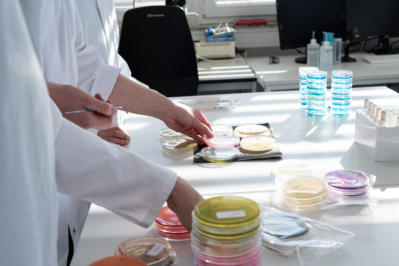
Tentamus Hygiene Audits
Tentamus offers you effective support in complying with all legal regulations: Our experienced auditors will thoroughly check your hygiene concept. Together with you, we work out any hygiene gaps and optimize your hygiene management.
The improved process flows save personnel and financial resources. The costs and risks that can result from poor operational hygiene are thus sustainably reduced.
Verification of the implementation of ‘Good Manufacturing Practice’ (GMP)
The main tasks of our colleagues in Hygiene & Quality Assurance are to carry out hygiene audits and to verify the company's own internal control systems (ICS) in the various areas of responsibility within the food industry. Tentamus hygiene audits are voluntary and are planned individually with you. However, they are usually unannounced. Internal audits, on the other hand, are announced in advance as part of quality management.
According to the Product Liability Act, food distributors have the burden of proof and must be able to demonstrate that all hygiene and legal regulations have been complied with from goods receipt to goods issue (in production, trade or catering).
The audits therefore focus on checking personnel and production hygiene, but also the entire environment and equipment of the facility, as well as compliance with legal regulations. The advisory nature of the audit and thus the dialogue with the employees of the audited company is always at the forefront.
Legal basis
As of 01 January 2006, Regulation (EC) No. 852/2004 concerns any food business operators operating at any level of production, processing, or distribution of food. They are obliged to establish, implement, and maintain one or more permanent procedures based on the HACCP principles, which ensure the safety of consumer health protection. This is the basis of our advisory services.
Creation of hygiene concepts
The experienced and competent team of the Tentamus Group assist your company in the in the development and creation of an individual hygiene concept.
Overview of
locations offering audits and trainings
The following locations of the Tentamus Group offer audits and trainings: