PCR Explained Simply | How It Works and Its Applications
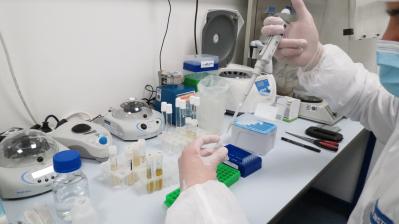
PCR (Polymerase Chain Reaction) is a molecular biology technique used for the targeted amplification of DNA. PCR makes it possible to copy a specific segment of genetic material millions of times in a very short period of time. Even if a complex sample contains only trace amounts of a particular sequence, PCR can reliably detect it.
PCR offers the following advantages:
- High sensitivity (even the smallest amounts of DNA are detected)
- High specificity (only the target sequence is amplified)
- Fast results (often within a few hours)
- Low material requirements
- Reliable detection in complex samples
For companies in the food and cosmetics industries, this means: precise, highly sensitive detection of microorganisms, allergens, animal species, genetic modifications, or other specific sequences in complex products and raw materials.
What do PCR tests detect?
PCR tests are used to specifically detect genetic material—that is, certain DNA or RNA sequences that are characteristic of an organism, a virus, a bacterium, or a defined genetic trait. What matters here is not the visible presence of a microbe or cellular material, but the existence of a specific genetic sequence.
In practice, a PCR test can, for example, show:
- whether a sample contains certain microorganisms,
- whether a food product is of animal or plant origin,
- whether it contains genetic modifications (GMOs) or hereditary diseases,
- whether food products contain sequences of allergenic species.
What exactly is PCR?
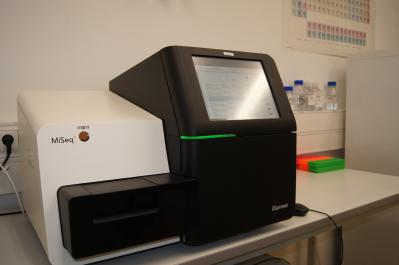
The polymerase chain reaction is a standardized method used to amplify a specific DNA segment outside a living organism. The technique was developed in 1983 by Kary Mullis, for which he later received the Nobel Prize.
The PCR reaction takes place in thermal cyclers, where the DNA extracted from the samples is subjected to precisely defined temperature cycles necessary for the individual steps of the reaction.
Essentially, the goal is to specifically identify a defined genetic sequence within a complex mixture of many molecules and amplify it exponentially. Within a short period of time, a few copies of a DNA segment can be turned into millions or even billions of copies.
The advantage of this method is that it does not require a large amount of genetic material to be extracted from the donor organism; instead, a small sample is sufficient, which can be easily and effectively amplified “in vitro,” that is, outside the donor cell.
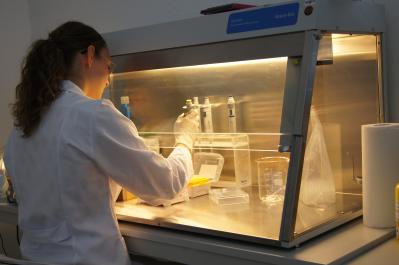
However, the high sensitivity of the PCR method also makes it susceptible to contamination. Clean working conditions, validated methods, and quality-assured processes are therefore crucial.
For industrial applications, this means that reproducible results can only be guaranteed if the entire process—from sample preparation to analysis—is standardized and protected against cross-contamination.
How PCR Works
For PCR to work, the target sequence must be known. To achieve this, primers that bind specifically to this target sequence are used—short synthetic DNA fragments that mark the start and end points of the section to be amplified.
Each PCR cycle consists of three steps:
- Denaturation – the DNA strands are separated
- Primer hybridization – primers bind to the target sequence
- Elongation – a heat-stable polymerase extends the DNA strands
These steps are repeated 25–45 times. With each cycle, the size of the target segment doubles—hence the term "chain reaction."
1. Denaturation
First, the double-stranded DNA molecule is heated to approximately 94–98 °C. This high temperature causes the two DNA strands to separate from one another. This results in two single-stranded DNA molecules, which serve as templates for the subsequent replication.
This step is necessary to make the target DNA sequence accessible for the next steps, since amplification can only occur on single-stranded DNA.
2. Primer Hybridization
In the next step, the temperature is lowered. The primers now bind to the start and stop sequences of the DNA fragment to be amplified. This process is called primer hybridization.
The primers precisely define which section is amplified. They mark the start and end of the desired sequence. This specificity is what makes PCR so precise: only if the primers bind correctly can the polymerase become active in the next step.
3. Polymerase Binding and DNA Synthesis (Elongation)
The thermocycler then raises the temperature to approximately 72 °C. This is the optimal temperature range for the heat-stable DNA polymerase.
The enzyme binds to the primers and adds complementary nucleotides (DNA building blocks). This creates a new complementary DNA strand. This process is called elongation.
At the end of this step, a genetic copy of the desired DNA fragment is produced. In each subsequent cycle, the newly produced DNA fragments also serve as genetic templates for further amplification. This results in exponential replication of the desired DNA fragment.
4. Repetition of the process: The actual chain reaction
The PCR process essentially involves repeating the steps described above. Each cycle consists of precisely defined temperature changes that are programmed into the thermal cycler. Theoretically, after just 30 cycles, a single DNA molecule can produce over a billion copies of the target sequence.
Further developments in PCR
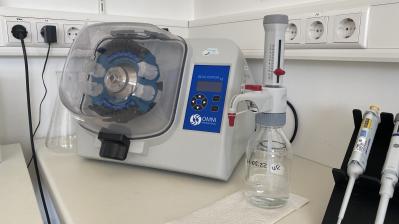
In addition to the traditional method, various PCR variants have become established to expand the range of applications.
In analytical laboratories such as those of the Tentamus Group, real-time PCR is often used, particularly for complex samples. This technique is especially well-suited for achieving the highest accuracy and providing quantitative results, as the reaction can be monitored in real time.
qPCR (quantitative polymerase chain reaction)
qPCR combines amplification with real-time measurement. It allows not only for the detection but also for the precise quantification of the initial amount of DNA. This is achieved by using fluorescent markers to monitor and record the amount of DNA during the PCR reaction itself.
Probe technology is often used for this purpose. A probe is a short, labeled DNA fragment that also binds specifically to the target sequence. During PCR, this probe is degraded by the polymerase, releasing a fluorescent signal.
qPCR has several advantages:
- Increased specificity, since a third sequence must match exactly in addition to the primers
- Real-time detection (real-time PCR): Fluorescence increases in proportion to the amount of amplified product
- Quantification: It is possible not only to determine whether a sequence is present, but also how much
RT-PCR (Reverse Transcriptase PCR)
RT-PCR extends the scope of conventional DNA-based PCR to include RNA samples. To do this, RNA is first transcribed into DNA using the enzyme “reverse transcriptase.” Only then does the conventional amplification via PCR take place. This method is essential for detecting RNA viruses, such as SARS-CoV-2, during the COVID-19 pandemic.
Nested PCR
In nested PCR, two consecutive rounds of amplification are performed using different primers, with the second set of primers binding within the fragment amplified in the first PCR. The amplified fragments from the first PCR serve as the template for the second PCR. Since the inner primers must bind to the specific product of the first reaction, it is highly unlikely that nonspecific products from the first round will be amplified again. Nested PCR is therefore highly specific and is used when only a very small amount of starting material is available.
How is a PCR test interpreted?
The PCR principle is suitable for both qualitative and quantitative analyses. While conventional PCR is used for the qualitative detection of a sequence, a modified form of PCR, known as qPCR, is employed to enable highly sensitive qualitative detection.
Qualitative detection
In conventional PCR, the results are often analyzed using gel electrophoresis. In this process, all DNA fragments present in the reaction mixture are separated by length in a gel matrix using an electric field and made visible through a staining procedure.
A DNA band in the gel matrix is considered a positive result if it can be identified, using a size standard, as a DNA fragment of the expected length.
Qualitative applications primarily involve the detection of specific organisms or genetic traits. Typical applications include:
- Detection of pathogenic microorganisms in food
- Identification of allergens
- Detection of GMOs
- Identification of specific plant or animal species
- Detection of viral infections
Quantitative Methods
In many industrial applications, however, it is not only crucial whether a sequence is present, but also in what quantity.
This is where qPCR (quantitative PCR) comes into play. It measures amplification in real time during the reaction using fluorescent markers. This allows the actual initial amount of DNA to be calculated.
Reference materials and calibration curves enable precise quantification. This is particularly crucial when compliance with limit values is required, such as in food analysis. For example, it allows one to determine whether a limit value has been exceeded or whether a batch can be released.
Typical applications include:
- Compliance with limit values in food analysis
- Determination of microbial contamination
- Quantification of microorganisms in cosmetic raw materials
- Monitoring of production processes
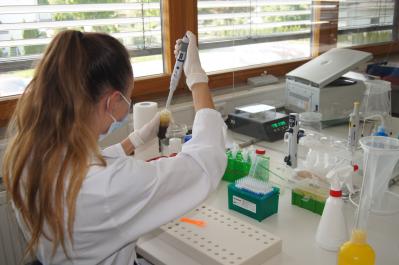
Key Applications of PCR
PCR has become a ubiquitous tool for a wide range of applications. Thanks to the rapid, simple, and relatively inexpensive amplification of genetic material, DNA analysis and detection have now become commonplace.
Research
In biological research, PCR is a key method for specifically amplifying and analyzing defined DNA segments. It enables the identification of genes and the investigation of mutations, and often serves as the basis for further procedures such as sequencing or cloning.
In basic research, it helps us understand regulatory mechanisms at the molecular level, while in applied research, it contributes to the development of new diagnostic methods, vaccines, and biotechnological products. Thanks to its high sensitivity and specificity, PCR has become an indispensable part of modern laboratory methods.
Medicine and Diagnostic Applications
PCR is a standard procedure in medical diagnostics. RT-PCR (a variant of conventional PCR) gained particular prominence for detecting SARS-CoV-2 during the COVID-19 pandemic.
The method also plays a key role in the detection of hereditary diseases and genetic mutations.
Food Analysis
For food manufacturers, the rapid detection of contamination is critical. PCR makes it possible to detect pathogenic bacteria at very early stages. This method is significantly faster than traditional methods, in which microbial contamination is identified through culture.
PCR is also used for species identification and authenticity testing, such as to prevent food fraud. Through targeted sequence analysis, animal or plant components can be clearly identified.
Cosmetics industry
In the cosmetics industry, PCR supports microbiological safety. Raw materials, intermediate products, and finished goods can be tested for specific microorganisms, thereby helping to ensure compliance with regulatory requirements.
Forensics and biological anthropology
In forensic science, PCR enables the analysis of genetic fingerprints. Even the smallest traces of genetic material are sufficient to analyze the DNA and identify perpetrators.
In paleontology as well, DNA fragments from fossils can be amplified using PCR, then sequenced and analyzed to draw conclusions about genetic relationships.
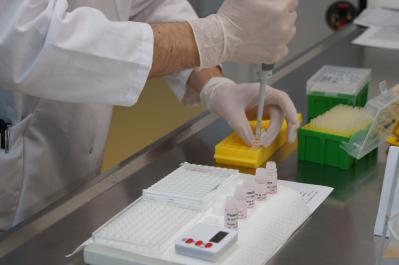
PCR at Tentamus: Reliable analytical testing for your products
PCR is a powerful method—but its reliability depends largely on proper execution, validated procedures, and qualified personnel.
Our laboratories use state-of-the-art thermal cyclers, validated PCR methods, and strictly controlled quality standards in accordance with DIN EN ISO/IEC 17025, which provide excellent protection against cross-contamination.
We can assist you with:
- Developing appropriate PCR strategies
- Qualitative and quantitative detection
- Validating new products
- Support with regulatory requirements
Whether it’s microbiological testing, GMO analysis, allergen testing, or species-specific detection, we’ll guide you every step of the way—from defining your needs to providing a reliable basis for decision-making.
Would you like to learn more about PCR analysis or have a specific sample tested?
Contact us—we’ll provide personalized advice and work with you to develop the right method for your needs.
FAQ
How long does a PCR test take?
A standard PCR typically takes between 1 and 3 hours, depending on the number of cycles, the length of the amplified fragment, and the method used. Modern rapid programs in the thermal cycler can shorten the reaction time.
What does “in vitro” mean in the context of PCR?
“In vitro” literally means “in glass” and refers to the fact that PCR takes place outside a living organism. The reaction proceeds under controlled conditions in a reaction vessel inside a thermal cycler, not within a cell. The genetic molecule is thus enzymatically amplified under defined laboratory conditions.
Is PCR a technically complex method?
PCR itself is now a standardized and largely automated procedure that is routinely performed in the laboratory. However, the development of suitable primers, the validation of the method, and the prevention of contamination are technically challenging, as even the smallest amounts of DNA can lead to false-positive results. PCR is therefore well-established in accredited laboratories, but it requires precise working methods and quality-assured procedures.
Where does the heat-stable polymerase used in PCR come from?
The heat-stable DNA polymerase used in PCR is derived from thermophilic bacteria that live in hot environments such as hot springs. Particularly well-known is the so-called Taq polymerase from Thermus aquaticus, whose enzyme remains stable even at high temperatures. This heat stability is crucial for the polymerase to withstand the repeated denaturation phases during the cycles without losing its activity.
What does a PCR reaction mixture contain?
For PCR to proceed reliably as an enzymatic chain reaction, a reaction mixture requires the following components:
- Template DNA from the respective sample material: contains the section to be analyzed or the target sequence
- Two specific primers: short DNA fragments that define the start and end points of the amplification
- Heat-stable DNA polymerase: the enzyme responsible for synthesizing new DNA
- Free nucleotides (dNTPs): building blocks for the formation of new DNA molecules
What does the Ct value indicate in qPCR?
In qPCR, the Ct value (cycle threshold) indicates the number of cycles required for the measured fluorescence to exceed a defined threshold level. It is thus indirectly related to the original amount of DNA or RNA in the sample: the lower the Ct value, the higher the initial concentration of the target sequence. High Ct values correspondingly indicate low amounts of genetic material.
What is the error rate for PCR tests?
PCR is considered a highly sensitive and specific detection method; however, as with any analytical procedure, errors are possible. False-positive results are usually caused by contamination with pre-amplified DNA, while false-negative results can be caused by inhibitors in the sample material, unsuitable primers, or an insufficient initial amount of DNA. Accredited laboratories therefore use validation procedures, quality controls, and reference standards to keep the error rate as low as possible.