Prevention and Detection of Microplastics in Food
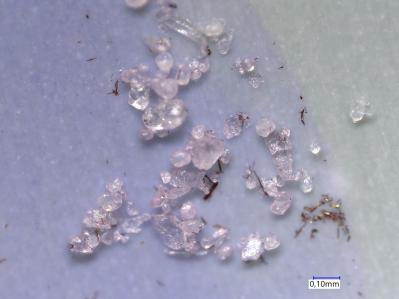
In recent years, microplastic particles found in the environment, in everyday consumer goods, as well as in food and drinking water have become a central topic in both scientific research and public debate. The term “microplastics” has been in official use since 2004; evidence of microplastics in the human body and other organisms has been found since around 2010.
These developments make it clear that microplastics are not merely an environmental problem, but are increasingly recognized as a significant food safety issue that requires further research, risk assessments, and regulatory measures.
What are microplastics, and how do they end up in the environment?
The presence of microplastics is closely linked to the growth of plastic production. Since the 1950s, when industrial mass production began (at approximately 2 million tons per year), global production has risen to over 400 million tons annually. Most plastics are petroleum-based and extremely durable, which means they degrade very slowly in the environment. Even new plastics made from renewable raw materials contribute to the problem, as they often take a very long time to degrade under natural conditions as well.
According to the European Chemicals Agency (ECHA), microplastic particles consist of solid polymer particles that may be mixed with additives. This may also include particles made of any material that are coated with a polymer. A material is considered a microplastic if at least 1% by weight of its particles have dimensions between 1 µm and 5 mm or, in the case of fibers, between 3 µm and 15 mm. There is not yet an internationally recognized definition.
Microplastics enter the environment—and ultimately the human body—through various pathways:
- Primary microplastics, which are intentionally manufactured or generated directly, such as synthetic textile fibers or, in the past, cosmetics
- Secondary microplastics, which are created by the breakdown of larger plastic products (such as packaging, films, or bottles) and by tire wear (1 kg per tire, 500,000 tons per year)
The most commonly identified types of plastic are polyethylene (PE), polypropylene (PP), polyethylene terephthalate (PET), and polystyrene. Tire wear is considered the largest source of microplastics, followed by synthetic textiles and the breakdown of plastic waste.
How do microplastics end up in food?
There are several causes of microplastic contamination in the food chain:
- Environmental contamination: Microplastics enter food through soil and water during cultivation or production
Contamination during food processing, e.g., due to storage conditions or processing equipment - Transfer along the food chain: Microplastics can be ingested by marine organisms or livestock, for example, and subsequently passed on to humans
- Migration from packaging: Microplastic particles from food packaging can end up directly in the food
A cause for concern is the fact that the oceans are becoming increasingly polluted because macroplastics (e.g., packaging) break down into microplastics there. Marine organisms obtain their nutrients through filtration, which is why fish and seafood are a particular focus of microplastic analyses.
Food from rural areas may also be contaminated with microplastics. Microplastics have been detected in sea salt (from plastic grinding mechanisms), honey, beer (e.g., from poorly cleaned bottles), as well as in fruits and vegetables. Packaging, processing machinery, conveyor belts, and plastic utensils used during food production and storage are the primary sources of contamination.
How else can microplastics be ingested?
Micro- and nanoplastic particles are released into the air through the wear and tear of car tires, synthetic textiles (e.g., when wearing or washing polyester clothing or face masks), and indoor dust, and can be inhaled. Nanoplastic particles are extremely small plastic particles in the nanometer range, typically smaller than 1 micrometer (µm) and often even less than 100 nanometers (nm). They are usually formed through the further breakdown of microplastics. Due to their very small size, they are invisible to the naked eye.
Kitchen utensils such as plastic cutting boards, spatulas, or storage containers contribute to sporadic exposure to microplastics, as fine plastic particles can be released through cutting, heating, or mechanical abrasion.
Another source of microplastics is wastewater, such as that from washing machines. Tap water and bottled drinking water can also contain microplastics. In this case, they are primarily released through plastic pipes, water treatment systems, filter materials, and plastic bottles and caps.
Can microplastics enter tissues and the bloodstream?
According to recent studies, small particles (microplastics in the lower micrometer range) and nanoplastics (one size smaller) can enter human tissue and even the bloodstream. Traces of microplastics have already been detected in the blood, the placenta, and lung and intestinal tissue. However, the extent to which this occurs and what the long-term consequences might be are still the subject of ongoing research.
What are the health concerns?
The effects of microplastics and nanoplastics on human health are complex and not yet fully understood, as their properties depend on numerous factors—such as the type of polymer, particle size, shape, and the formation of a biocorona—which complicates risk assessment.
Experimental studies have shown that these particles can cross biological barriers in the lungs and intestines, raising concerns about their potential distribution throughout the body. Early clinical findings suggest possible adverse health effects, including impacts on the immune system as well as on reproductive and cardiovascular functions. However, these studies are still limited due to small sample sizes and insufficient exposure data. Findings from animal and cell studies largely support these preliminary observations.
To better understand the risks to humans and enable comprehensive risk assessments, more advanced methods and long-term studies are needed. Organizations such as the WHO, the European Food Safety Authority (EFSA), and the German Federal Institute for Risk Assessment (BfR) point to the need for further research.
How can you avoid microplastics in your food?
It is currently impossible to completely avoid microplastics in food. Seafood (especially mussels and shrimp), fish from heavily polluted waters, drinking water in reusable bottles and packaged beverages, as well as highly processed and packaged foods are considered to be relatively more contaminated, as microplastics are either ingested directly or transferred through processing and packaging.
Currently, consumers can take the following preventive measures, among others:
- Use tap water with certified filtration systems
- Consume food packaged in glass, metal, or paper
- Avoid plastic packaging (especially for fatty or hot foods)
- Consciously reduce single-use plastics
- Do not heat food in plastic containers
- Buy fresh and unprocessed foods
What measures and regulations are in place to reduce microplastics in food?
Regulation of microplastics in food within the EU is constantly evolving and addresses both intentional and unintentional sources. The REACH Regulation (EU) 2023/2055 introduced restrictions on intentionally added microplastic particles. While this primarily applies to products such as cosmetics and cleaning agents, certain exceptions apply to food additives. In addition, unintentional contamination (particularly from food contact materials) is increasingly subject to regulation.
Regulation (EU) 2025/351, which has been in effect since March 16, 2025, updates Regulation (EU) No. 10/2011 and places greater emphasis on plastics that come into contact with food, including new labeling requirements for reusable plastic products, such as instructions for use and warnings in the event of material degradation.
First and foremost, the industry bears responsibility for curbing microplastics, for example through the use of more sustainable packaging materials, improved recycling strategies, optimized production processes, strict quality and hygiene controls, and the development of modern tire technologies. In this context, monitoring the production chain through regular laboratory analyses plays a central role in identifying and subsequently eliminating potential sources of contamination. Specialized laboratories use modern detection and monitoring methods to provide reliable data on microplastics in water, raw materials, and food, thereby establishing the scientific basis for risk assessments, regulation, and preventive measures.
The European Food Safety Authority (EFSA) will conduct a scientific assessment of the potential health risks posed by microplastics in food, drinking water, and air, with the report expected to be published by the end of 2027. In 2025, EFSA already released findings on the release of micro- and nanoplastics from food contact materials. In addition, the WHO published guidelines on drinking water quality in 2022 and 2024.
How are microplastics detected in food?
The analysis of microplastics in food presents significant analytical challenges, as the particles are extremely small and occur in a wide variety of material types, shapes, and sizes. In addition, complex food matrices with high fat, protein, or water content require labor-intensive sample preparation and increase the risk of contamination during analysis. Specialized analytical methods are used to detect microplastics. These may include:
- Optical and electron microscopy methods for particle counting and morphology
- Spectroscopic methods (optical methods with additional qualitative analysis), such as FTIR and Raman spectroscopy, for
identifying polymer types - Thermoanalytical methods, such as pyrolysis-GC/MS, which enable quantitative determination of plastic types
Specialized laboratories, such as those of the Tentamus Group, have the necessary expertise, infrastructure, and validated methods to reliably detect microplastics, particularly in water and food products. We also assist companies with quality control, risk assessment, and regulatory compliance.
Outlook
There is currently evidence that microplastics and nanoplastics are entering the food chain, although the available data is still limited, particularly for non-seafood products and processed foods. To identify the exact sources of these particles in food, carefully designed studies are needed that take into account all possible sources—including contamination of raw materials and processing facilities.
At the same time, there is an urgent need for international cooperation and standardization of analytical methods in order to obtain reliable and comparable data. Future regulations could therefore require migration testing for micro- and nanoplastics from food-contact materials.