Seed analysis
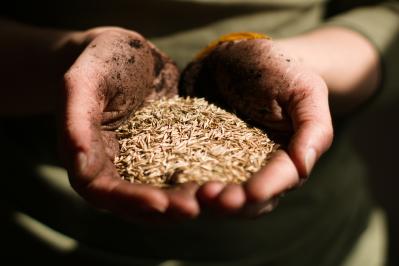
Vital seed is the starting point for all agricultural plant production. This applies in particular to the cultivation of cereals. It is regulated by law that seed may only be marketed for commercial purposes if it is recognized as pre-basic seed, basic seed, certified seed or standard planting material.

Challenges for producers and distributors
Farmers, seed producers and seed distributors must ensure high product quality. This includes the germination capacity and vigor of the seed, which largely depend on the storage period and storage conditions. The early detection of seed diseases, such as fungal infestation and blight, as well as pest infestation and the guarantee of high varietal purity are essential for distribution. In addition, the labeling of seeds containing genetically modified organisms (GMOs) is mandatory. GMO tests are mandatory for the advertising of seeds as “without genetic engineering”.
Detailed laboratory analyses in the accredited laboratories of the Tentamus Group ensure high seed quality.

Necessary tests for the analysis of seeds
Depending on the type of seed, various product-specific analyses and procedures can be used to guarantee high seed quality.
Analysis of residues and contaminants
A comprehensive range of methods, including gas chromatography (GC), liquid chromatography (LC), high-performance liquid chromatography (HPLC), mass spectrometry and high-resolution mass spectrometry (HRMS), is used in residue analysis to determine undesirable substances in seeds. The tests used depend on the seed and the parameters to be analyzed. Using a pesticide combination method, the accredited laboratories of the Tentamus Group offer the possibility of testing a sample for over 900 pesticides.
Residues frequently found in seeds are:
- Dioxins, furans, dioxin-like PCBs
- Mycotoxins
- Heavy metals
- Ethylene oxide
- Glyphosate, AMPA
- PAHs
Microbiological testing
Depending on the exact starting products, various seed tests are used for microbiological quality assurance. Poor storage conditions can lead to contamination with bacteria or molds, especially in the case of seeds that are easy to store, such as grain.
Seed can be tested for the following parameters, among others:
- Total bacterial count
- Salmonella
- E. coli
- Listeria
- Yeasts and molds
- Enterobacteriaceae
Chemical analysis
The seed of some types of grain requires additional analyses to determine ingredients that affect seed quality.
The following parameters are examined by means of chemical analysis:
- Bitter substances (lupins)
- Water content (relevant with regard to storage)
- Protein content
- Fatty acids (for oilseeds)
Analysis for GMOs
Testing for genetically modified organisms (GMOs) in the laboratory is mainly based on DNA-based methods that enable sensitive, specific and quantitative detection of genetic modifications in seeds.
The classic procedure in GMO analysis consists of several stages. It begins with a screening test, which provides an indication of the presence of GMO components in the sample being analyzed. This is followed by variety identification tests, which provide a qualitative statement on the presence of a specific variety of GMO in the sample. This is followed by the quantification of the identified GMO variety in the seed sample. The Tentamus Group uses quantitative real time PCR (qPCR or real time PCR for short) for such quantifying investigations of GMOs in seed samples, in which the amount of amplified DNA is measured in real time during the PCR reaction using probes or fluorescent dyes. This method can be used to detect ratios of an analyzed GMO in the genome of the plant.
Purity testing
In the purity test, the so-called technical purity is determined as a percentage by weight composition of the tested sample. For this purpose, the seed sample is sorted into the components pure grains, harmless impurities such as broken grains and chaff as well as contamination with other species (e.g. weed seeds) and the purity is specified as a percentage. This ensures that a sample actually contains a majority of intact and pure seeds.

Sample shipment for the analysis of seeds
To ensure that your seed samples are analyzed quickly and reliably, the Tentamus Group offers you various options for submitting samples. Shipping by parcel service is possible, as is personal delivery to one of our laboratories.
Relevant legal bases and guidelines
- Directive 2001/18/EC of the European Parliament and of the Council (deliberate release into the environment of genetically modified organisms)
- Regulation (EC) No 1829/2003 of the European Parliament and of the Council (genetically modified food and feed)
Then contact us at +49 30 206 038 230 or hello@tentamus.com
Overview of the Tentamus Group laboratories that offer seed analyses
The following laboratories from the Tentamus Group offer analyses of seeds:
This might also interest you:
- Analysis
Residue analysis
Chemical analysis
Microbiological testing
- Product categories
Baked goods
Grains and flour
Cereals
Feed
- Further services