Matcha Ingredients – Everything You Need to Know
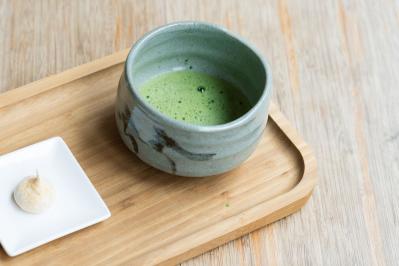
Few beverages have experienced a rise comparable to matcha in recent years. From a traditional Japanese tea powder, it has developed into a global trend product. Whether as tea, latte, smoothie, or an ingredient in baked goods and dietary supplements — the bright green powder is seen by many consumers as a symbol of a health-conscious lifestyle. But what really lies behind this trend product?
What exactly is matcha?
Matcha is a finely ground powder made from specially cultivated and processed green tea leaves. Unlike conventional green tea, matcha tea leaves are shaded for several weeks before harvest, which changes the composition of certain constituents. After harvesting, the leaves are steamed, dried, and finally ground into a fine powder. Since the entire leaf is consumed, matcha contains higher concentrations of certain plant compounds than classic green tea.
A particularly striking sensory characteristic of matcha is its astringency — strictly speaking not a taste at all, but what is known as a trigeminal sensation, since the actual taste categories comprise only sweet, sour, salty, bitter, and umami. The main substances responsible are catechins, a subgroup of polyphenols, above all epigallocatechin gallate (EGCG). These bind to proteins in saliva and cause them to clump together, so that saliva briefly loses its lubricating properties, producing the typical furry, dry mouthfeel.
The overall sensory impression of matcha arises from the interplay of several groups of substances: catechins also contribute to a mild bitterness, caffeine further intensifies this bitterness, while L-theanine provides umami and sweetness. Free amino acids such as glutamic acid contribute additional umami notes, and volatile aroma compounds create grassy, fresh, sometimes hay-like, floral, and subtly fishy (in a pleasant sense) aromas.
High-quality matcha often tastes less astringent than lower-grade matcha. This effect is due to the shading of the tea plants before harvest: it increases the content of L-theanine and other amino acids, while the catechin content tends to decrease. This shifts the ratio of amino acids to catechins in favor of a softer, milder overall impression.
Conventional green tea, by contrast, generally tastes lighter, fresher, and grassier. Depending on the type of tea, herbaceous, floral, or slightly nutty aromas may dominate. Since only the water-soluble constituents pass into the infusion, the flavor overall is less intense and less creamy than that of matcha.
Quality plays a decisive role for both products. According to ISO/TR 21380, high-quality matcha products are characterized by an intense green color, a pronounced umami taste, and a characteristic aroma. Whisking also produces a fine foam. Lower-grade matcha can taste strongly bitter, astringent, and flat, and often shows a yellowish-green or brownish color.
The essential difference from green tea therefore lies not only in production, but also in how the constituents are prepared and absorbed. While only an infusion is consumed with green tea, the entire tea leaf is consumed in powder form with matcha. As a result, constituents such as catechins, caffeine, and amino acids enter the body in higher quantities.
Ways of using matcha
The ways matcha can be used are diverse. Besides the traditional preparation as tea, the powder is now used in numerous foods and beverages — from matcha lattes and refreshing drinks to ice cream, chocolate, baked goods, dietary supplements, and even cosmetics. This versatility, combined with its modern image and the health properties attributed to it, has made matcha one of the most popular trend products in the field of nutrition and wellness.
What effect do matcha's constituents have on the body?
The popularity and quality of matcha are determined above all by four central groups of constituents:
Catechins
Catechins are plant-based antioxidants considered the most important bioactive compounds in matcha. They belong to the polyphenol group. Particularly relevant is epigallocatechin gallate (EGCG), to which research attributes anti-inflammatory, anti-carcinogenic, and cardioprotective effects.
More recent studies are examining the influence of green tea polyphenols on the gut microbiome. This effect is supported by the natural dietary fiber of the tea leaves, which is fully consumed with matcha.
Accordingly, catechins and dietary fiber can:
- promote the growth of certain beneficial gut bacteria
- influence microbial diversity
- support metabolic processes in the gut
However, matcha can interact with various medications, which may reduce their effectiveness. It does not replace medical therapy.
L-theanine and caffeine
A distinctive feature of matcha is the combination of caffeine and the amino acid L-theanine. L-theanine occurs almost exclusively in tea and is responsible for matcha's calming, focus-enhancing effect. The L-theanine content is a reliable indicator of matcha quality and is directly linked to the cultivation method.
While caffeine can increase alertness and wakefulness, L-theanine is associated with relaxation and stress reduction. According to studies such as those published in Nutritional Neuroscience, the two substances together can promote concentration without causing the jitteriness some people experience after drinking coffee.
Chlorophyll
Chlorophyll gives high-quality matcha its characteristic bright green color and has antioxidant effects in the body. Under unfavorable storage conditions, the characteristic green color changes due to the conversion of chlorophyll into pheophytins. A dull, yellowish-green powder is a clear sign of inferior quality or improper processing of the green tea.
Vitamins and minerals
- Vitamins A, B1, B2, B6, E, C, and K
- Calcium, iron, potassium, zinc, and copper
Whether matcha can be called a superfood depends largely on its quality. High-quality matcha from traditional Japanese growing regions generally contains higher concentrations of the valuable constituents mentioned above. At the same time, matcha does not replace a balanced diet, but can make a valuable contribution as part of a varied and healthy lifestyle.
Potential harmful substances from contamination of matcha
Matcha is a high-quality natural product valued worldwide for its distinctive constituents and characteristic flavor. However, because the entire green tea leaf is ground into fine powder for production, undesirable substances that enter the product during cultivation, processing, or through environmental influences can also be absorbed.
Pesticide residues
Like other agricultural products, matcha can contain residues of plant protection products. These may be used during cultivation to protect the tea plants from pests or diseases.
Heavy metals
In addition to pesticides, heavy metals can also be present in matcha. Tea plants absorb minerals and trace elements from the soil. Depending on the location and environmental conditions, undesirable heavy metals can also enter the plant.
Lead
Lead can enter soils and plants through industrial emissions, traffic, or other environmental burdens. Increased lead intake through food should be avoided, as lead can accumulate in the body and poses particular health risks for children and pregnant women.
Cadmium
Cadmium is a naturally occurring heavy metal that can also enter the environment through industrial activities. Tea plants can absorb cadmium from the soil and accumulate it in their leaves. Since the entire leaf is consumed with matcha, monitoring cadmium levels is particularly important. Long-term high cadmium intake can impair kidney function and negatively affect bone health.
Microbiological contamination
In addition to chemical contaminants, microbiological contamination can also affect the quality and safety of matcha. This can arise during cultivation, harvesting, processing, or storage.
Quality differences in matcha
Not all matcha is the same. While the finely ground green tea powder may appear uniform at first glance, a closer look at its constituents reveals considerable quality differences.
Origin and chemical composition: a direct connection
The geographic and climatic conditions of the growing region, combined with traditional cultivation methods such as shading, are the decisive factors for a high concentration of L-theanine, EGCG, and chlorophyll.
Japan is considered the global gold standard for matcha. The regions of Uji, Nishio, and Yame in particular produce matcha with especially high L-theanine and EGCG levels. The reason lies in the traditional cultivation method: the tea plants are deliberately shaded for the last three to four weeks before harvest. This stress condition stimulates the plant to produce significantly more L-theanine and chlorophyll. Strict Japanese quality standards in cultivation, harvesting, and processing ensure a consistent composition of constituents. Japanese matcha is therefore best suited for a health-conscious diet.
China is the world's largest tea producer and supplies a large share of the affordable matcha on the global market. Chinese matcha is often grown under different climatic conditions and with shorter or less intensive shading periods. The result is a lower L-theanine content, less intense chlorophyll formation, and an overall weaker concentration of bioactive compounds. For culinary purposes, such as in baked goods or smoothies, this quality is often sufficient, but it is only conditionally suitable for health-oriented consumption.
Other growing countries such as Korea, Taiwan, or Kenya are increasingly entering the matcha market. The composition profiles here vary considerably and depend on soil conditions, climatic conditions, tea varieties, and processing standards.
Certifications as a guide
Since matcha is produced worldwide under very different conditions, certifications are an important, though not the sole, quality signal.
The JAS certificate (Japanese Agricultural Standard) from the Japanese Ministry of Agriculture defines binding standards for the production, processing, and labeling of Japanese agricultural products, including tea. It provides a reliable basis for proof of origin and quality.
Organic certifications under EU, USDA, or JAS organic standards demonstrate that the matcha was grown without synthetic pesticides and fertilizers. Organic matcha significantly reduces the risk of residue contamination.
Laboratory analyses and residue testing by independent testing institutes complement certifications and provide information on actual contaminant, heavy metal, and pesticide residue levels.
Independent laboratory analyses for safe matcha products
Independent laboratory analyses play a central role in ensuring the quality and safety of matcha products. Their primary purpose is consumer protection, by identifying and assessing potential health risks from contamination. At the same time, they are an essential part of consistent quality management along the entire supply chain — from raw material to finished product. Especially for imported matcha from countries with less strict cultivation regulations, such analyses are an indispensable quality tool. Accredited testing laboratories provide the necessary technical and methodological assurance in this regard, since they work according to defined standards and their results are traceable and legally sound.
How is matcha examined in the laboratory?
To reliably ensure the quality, authenticity, and safety of matcha, the Tentamus Group offers a comprehensive range of analyses.
A central component is origin verification using the innovative Stable Isotope Ratio Analysis (SIRA). This sophisticated method is carried out in a specialized isotope laboratory in Japan and analyzes the tea's "atomic fingerprint" (isotope fingerprint) based on the isotope ratios of hydrogen, oxygen, sulfur, and strontium. Since these characteristic isotope patterns are shaped by the climate, precipitation, and geological properties of the respective growing region, the geographic origin of matcha can be determined with precision.
In addition, the authenticity testing carried out at the Tentamus Group's German laboratories enables clear identification of the tea plant used through modern DNA analysis. This method confirms the botanical identity of the matcha and simultaneously detects adulteration through foreign plants or undeclared components. This ensures that the product is free of unauthorized extenders or inferior substitutes.
Highly precise nuclear magnetic resonance spectroscopy (NMR spectroscopy) is used for quality assessment. Based on the composition profile of constituents such as theanine, catechins, chlorophyll, and caffeine, reliable statements about product quality can be made. The analytical data enable a reliable differentiation of different quality grades and support the official classification of the tea.
Furthermore, NMR analysis combined with multivariate data analysis can be used to generate what is known as metabolic profiling, and the chemical "fingerprint" of each individual tea can provide insights into, among other things, its harvest period, age, or geographic origin.
Equally important is the safety testing, in which matcha is comprehensively examined for potential contaminants. Using modern mass spectrometric methods, more than 900 pesticide residues can be detected as part of a multi-residue screening. Additional analyses are carried out for mycotoxins such as ochratoxin A and aflatoxins, heavy metals such as lead, cadmium, and aluminum, as well as for allergens that may be introduced, for example, through cross-contamination during production processes. It is also checked whether unauthorized colorants or preservatives are present.
Overall, these comprehensive investigations help verify compliance with legal limits and ensure the safety and quality of matcha on a sustained basis. Through the combination of these specialized examinations, the Tentamus Group provides a holistic assessment of matcha — from origin and authenticity to quality assessment and product safety.
Learn more about our matcha analyses here.