Frozen Blueberry E. coli Recall: Why Early Testing, Sampling Strategy, and Supplier Verification Matter
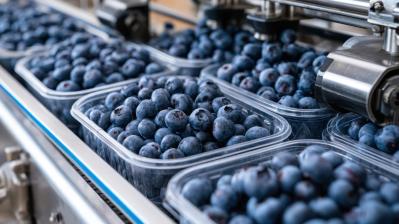
The 2026 frozen blueberry E. coli outbreak highlights an important reality for food manufacturers: testing is most effective when it is used early, strategically, and as part of a broader food safety system.
CDC and FDA investigated an outbreak of Shiga toxin-producing E. coli O145:H28 linked to frozen organic blueberries supplied by Frutas y Hortalizas del Sur S.A. of Chile. The outbreak ultimately included 17 reported illnesses and six hospitalizations, with no deaths. CDC closed the outbreak investigation on September 21, 2026, but the product story continued.
On October 2, additional lots of Great Value Organic Blueberries, Great Value Organic Triple Berry Blend, and Trader Joe’s Organic Mixed Berry Blend were recalled because of potential contamination with E. coli O145:H28. Some of the recalled products carry best-by dates extending into 2028.
The event reinforces several important lessons about early testing, sampling strategy, supplier verification, and how quality teams interpret laboratory results.
What Happened in the 2026 Frozen Blueberry E. coli Outbreak?
During the investigation, FDA collected finished-product samples in the United States. All of the FDA-collected samples tested negative.
But earlier in the investigation, Publix had collected and tested GreenWise frozen blueberries, and one sample tested positive for the same E. coli strain associated with illnesses in the outbreak. FDA and CDC ultimately concluded that frozen organic blueberries were the outbreak vehicle based on the combined epidemiological, laboratory, and traceback evidence.
At first glance, negative and positive results from the same broader supply chain may appear contradictory. They are not necessarily.
Why Can a Food Sample Test Negative Even When Contamination Is Present?
Microbial contamination can be present at low levels or distributed unevenly throughout a food lot. A sample that does not contain the pathogen can test negative even when contamination exists elsewhere in the lot.
FDA’s HACCP guidance warns that microbiological testing has sampling limitations and that inadequate sampling can create a false sense of security.
This makes both when you test and how you sample critical parts of the testing strategy.
Can a Food Product Test Negative and Still Be Contaminated?
Yes. Microbial contamination may be present at low levels or distributed unevenly throughout a food lot. A sample can therefore test negative even when contamination exists elsewhere in the product. This is why pathogen testing should be supported by an appropriate sampling plan, supplier information, historical data, and other food safety evidence.
How Can Early Pathogen Testing Help Identify Risk Sooner?
Early testing is not a guarantee against recalls. It is a tool for creating earlier opportunities to identify a problem and make a decision before product moves further through the supply chain.
For food manufacturers, processors, distributors, and private-label brands, those opportunities may exist at several points.
Incoming Ingredient and Raw Material Testing
Testing higher-risk incoming ingredients can provide additional verification before those materials are incorporated into finished products or distributed to customers.
A risk-based program may consider factors such as the ingredient, country or region of origin, supplier history, previous microbiological findings, processing conditions, intended use, and whether the product will undergo a validated kill step.
For ingredients such as frozen fruit that may be consumed without further processing, the consequences of an undetected pathogen can extend far downstream.
Supplier Verification and Imported Ingredients
Supplier approval should not become static.
A supplier that has historically performed well may experience changes in agricultural conditions, processing, sanitation, sourcing, transportation, or other variables that affect the risk profile.
Independent testing can provide data that helps quality teams periodically verify whether supplier performance continues to support existing assumptions.
The frozen blueberry outbreak illustrates why that ongoing visibility matters. FDA later added frozen blueberries from the supplier to Import Alert 99-35, meaning future shipments may be detained without physical examination.
Water, Process, and Environmental Verification
Depending on the product and operation, contamination may originate or spread through agricultural water, processing water, equipment, handling practices, or the processing environment.
Product, water, and environmental sampling can support verification that preventive and sanitation controls are functioning as intended when those tools are appropriate for the process and hazard.
Finished Product Testing
Finished-product testing remains an important tool. However, the blueberry investigation demonstrates why a negative result should not automatically be treated as evidence that an entire lot is free of contamination.
The strength of the result depends on the sampling plan, analytical method, product matrix, number of samples, lot size, and the way contamination may be distributed.
Why Sampling Strategy Matters in Microbiological Testing
Testing results are only as useful as the question the sampling plan was designed to answer.
When pathogens may be present at low levels or distributed unevenly, a small number of samples may not represent the entire lot. This does not make testing ineffective. It means the sampling plan, lot definition, method, and intended decision must be considered together.
Why Testing Should Be Part of a Broader Food Safety Program
Testing should support preventive controls, not replace them.
A strong food safety program combines analytical data with supplier qualification, traceability, sanitation, process controls, inspection findings, historical performance, and other relevant information.
FDA’s own approach to the blueberry outbreak demonstrates this principle. The agency did not rely exclusively on its negative finished-product samples. Investigators also considered epidemiological evidence, traceback records, a positive sample obtained by Publix, supplier information, and inspection findings. Together, that evidence identified the blueberries as the confirmed outbreak vehicle.
Laboratory results are most powerful when they are interpreted in context.
How Can Food Manufacturers Strengthen Early Detection?
A more proactive testing strategy starts with identifying where better information could change a decision.
Quality teams should consider whether current programs provide enough visibility into:
- high-risk raw materials
- new or changing suppliers
- imported ingredients
- products without a validated kill step
- agricultural or processing water
- environmental conditions where relevant
- supplier performance trends
- unexpected or conflicting results
- finished products requiring additional verification
The objective is not simply to increase the number of samples. It is to design testing around the hazards, products, suppliers, and decisions that matter most.
Food Safety and Pathogen Testing With Tentamus North America
Tentamus North America provides food manufacturers with access to accredited laboratories supporting microbiological testing, pathogen detection, raw material testing, finished-product testing, water analysis, chemistry, and other food safety needs.
Our team can help connect manufacturers with the appropriate laboratory capabilities for routine verification, supplier programs, investigations, and other testing needs.
Early testing cannot guarantee that every problem will be found.
But the right testing strategy can create something quality teams rarely get back once a problem reaches the market: time to investigate, respond, and act.
Strengthen Your Food Safety Testing Strategy
Whether you are reviewing supplier verification, incoming ingredient testing, pathogen testing, or the broader testing strategy supporting your food safety program, Tentamus North America can help.
Talk to a Food Safety Expert
hello.americas@tentamus.com | +1 (888) 503-1020
FAQ
- What type of E. coli was linked to the frozen blueberry outbreak?
The outbreak was linked to Shiga toxin-producing E. coli O145:H28, a pathogenic strain capable of causing severe gastrointestinal illness and, in some cases, serious complications such as hemolytic uremic syndrome. - Can frozen blueberries carry E. coli?
Yes. Freezing does not reliably eliminate pathogenic E. coli. Contamination that occurs before freezing can therefore remain a food safety concern in frozen fruit. - Can a negative pathogen test guarantee a food lot is safe?
No. A negative result applies to the sample tested and must be interpreted in the context of the sampling plan, lot, analytical method, supplier information, and other relevant evidence. - When should manufacturers consider incoming ingredient testing?
Incoming ingredient testing may be appropriate when the ingredient, supplier, origin, intended use, historical performance, or lack of a later kill step creates a meaningful microbiological risk. Testing should be risk-based and designed around the decision the data needs to support.
SOURCES
FDA — Outbreak Investigation of E. coli O145:H28: Frozen Blueberries (July 2026)
CDC — E. coli Outbreak Linked to Frozen Blueberries
https://www.cdc.gov/ecoli/outbreaks/blueberries-07-26/index.html
FDA — Frutas y Hortalizas del Sur S.A. Expands Recall to Additional Lots of Frozen Organic Blueberries and Mixed Berry Products
FDA — HACCP Principles & Application Guidelines
FDA — FSMA Frequently Asked Questions
https://www.fda.gov/food/food-safety-modernization-act-fsma/frequently-asked-questions-fsma